








How edge computing improves smart city services
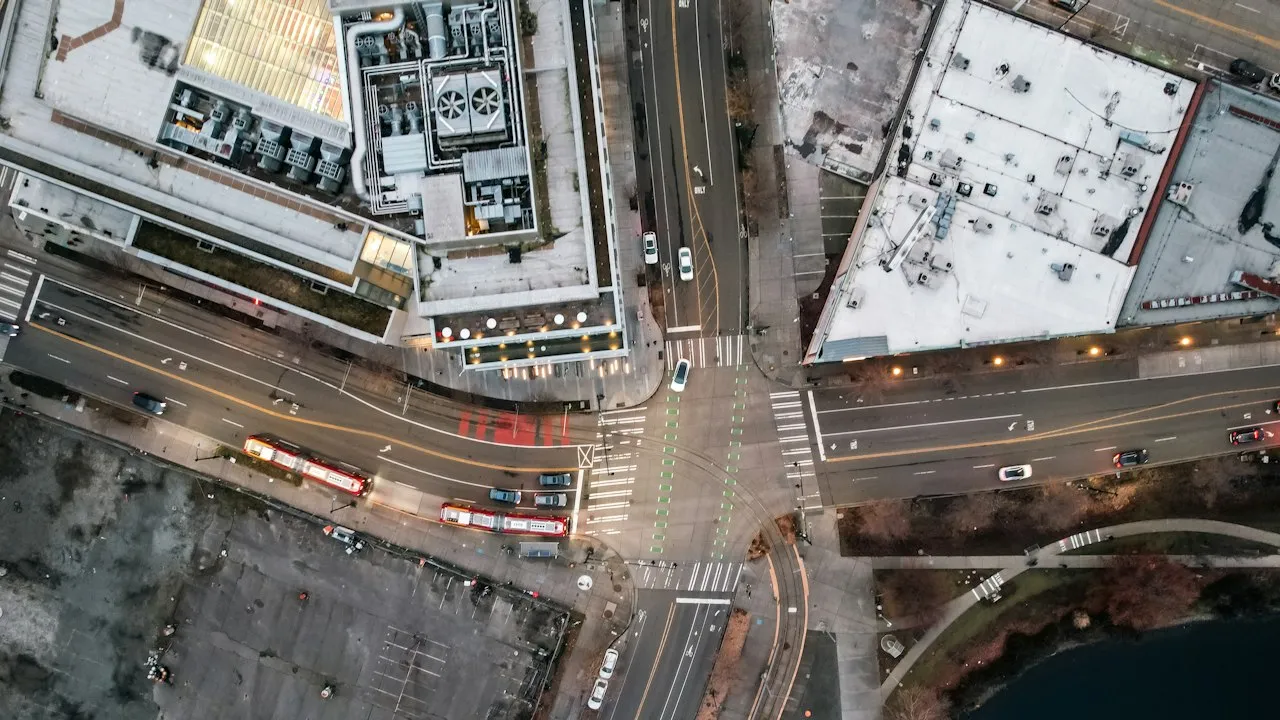
Smart city services depend on fast, reliable decisions. Traffic signals must react to congestion, public safety systems need timely alerts, and utilities benefit from immediate visibility into local demand. Cloud platforms remain valuable for large-scale storage and analysis, but they can introduce delays when every data point must travel to a remote data centre. Edge computing moves selected processing closer to the devices generating information, helping cities respond with greater speed and resilience.
Edge computing brings intelligence closer to city operations
Edge computing places computing resources near cameras, sensors, gateways, connected vehicles, or local facilities. Rather than sending every video stream or sensor reading to a central cloud environment, an edge device can filter, analyse, and act on relevant data locally.
For example, a roadside unit can detect a queue forming at a junction and adjust signal timing in seconds. It can transmit only aggregated traffic counts and incident data to the central platform, reducing bandwidth use while retaining information that supports long-term planning.
This architecture is particularly useful where latency matters. A delay of several seconds may be acceptable for a weekly waste collection report, but it is less acceptable for collision detection, flood warnings, or emergency vehicle priority systems. The National Institute of Standards and Technology’s guidance on edge computing describes the model as a distributed approach that enables processing nearer to data sources.
Faster responses improve public services
The most visible advantage of edge computing is lower latency. Data can be interpreted at or near the point of collection, allowing local systems to react before information reaches a central cloud service.
Traffic management becomes more adaptive
Connected cameras, radar units, and vehicle sensors can monitor traffic flow at intersections. Edge-based software can identify congestion, stationary vehicles, pedestrian movements, or unusual patterns without continuously uploading raw footage.
A city can use those insights to extend a green light phase, coordinate neighbouring junctions, or send route information to digital roadside signs. For residents, this can mean shorter waits and more predictable journeys. For emergency responders, connected traffic signals can create safer routes through busy streets.
Public safety systems can prioritise relevant events
Video analytics frequently produces vast volumes of data. Processing it entirely in the cloud may be expensive and may create privacy concerns. At the edge, a system can be configured to detect specific events, such as a person entering a restricted area, smoke near public infrastructure, or an abandoned object in a transport hub.
Only event-related metadata or authorised clips need to be shared with a control centre. Local processing gives operators faster alerts while limiting unnecessary data transfer.
Connected infrastructure becomes more reliable
Smart cities cannot depend on a perfect network connection at every location. Underground facilities, rural outskirts, transport tunnels, and busy event venues can all experience intermittent connectivity. Edge computing allows local systems to continue operating when access to central services is disrupted.
A water monitoring station, for instance, can identify abnormal pressure readings and trigger a local alert even if the connection to the main utility platform is temporarily unavailable. When connectivity returns, the device can synchronise records with the central system.
This approach supports operational resilience. Cloud services can still coordinate city-wide analysis, reporting, and machine learning, while edge nodes maintain essential local functions. The result is a distributed service model with fewer single points of failure.
Data governance can be strengthened at the edge
Cities handle data that may relate to residents, visitors, businesses, and public assets. Data governance must therefore be built into the technology design, not treated as an afterthought.
Edge devices can reduce exposure by processing sensitive inputs near their source. A smart camera might convert video into anonymous counts of pedestrians or vehicles, then delete the raw imagery after a short, clearly defined retention period. Air-quality monitors can send environmental readings without collecting personal data at all.
You should still consider encryption, device authentication, software updates, access controls, and audit logs. Edge environments may include thousands of geographically dispersed devices, making lifecycle management a significant responsibility. A compromised roadside gateway can become an entry point into wider municipal systems if security has been poorly designed.
Good web design helps people use smart city data
Edge computing does not deliver public value on its own. Staff, residents, and partners need clear interfaces that turn technical signals into usable decisions. A transport control dashboard should highlight the most urgent incidents. A public travel page should present disruption information in plain language. A utility operator needs trends, warnings, and next actions without being overwhelmed by raw telemetry.
Consistent interface patterns make these services easier to use across departments. The principles behind Design systems for consistent multi-page websites can help teams create dashboards, portals, and mobile tools that feel coherent even when they draw on multiple edge and cloud systems.
Start with one measurable service problem
A successful implementation usually begins with a focused challenge rather than a broad ambition to make everything “smart”. You might target persistent congestion near a school, irregular waste collection routes, or delayed detection of leaks in public buildings.
Define what success means before selecting hardware. Useful measures may include incident response time, energy consumption, service availability, maintenance costs, or resident satisfaction. This gives technology teams and service leaders a shared basis for evaluating results.
Edge computing supports practical smart city progress
Edge computing helps smart city services act closer to where events occur. It complements central cloud platforms rather than replacing them, assigning immediate decisions to local devices and wider analysis to shared systems.
Key points to retain include:
- Lower latency supports responsive traffic, safety, and utility services.
- Local processing can reduce bandwidth costs and limit unnecessary data transfers.
- Edge nodes can keep priority functions running during network interruptions.
- Strong security, governance, and maintenance processes are required across every device.
- Clear digital interfaces turn edge-generated data into better decisions for staff and residents.
- Focused pilots with measurable outcomes provide a sound route to wider deployment.