


How quantum sensors improve medical diagnostics
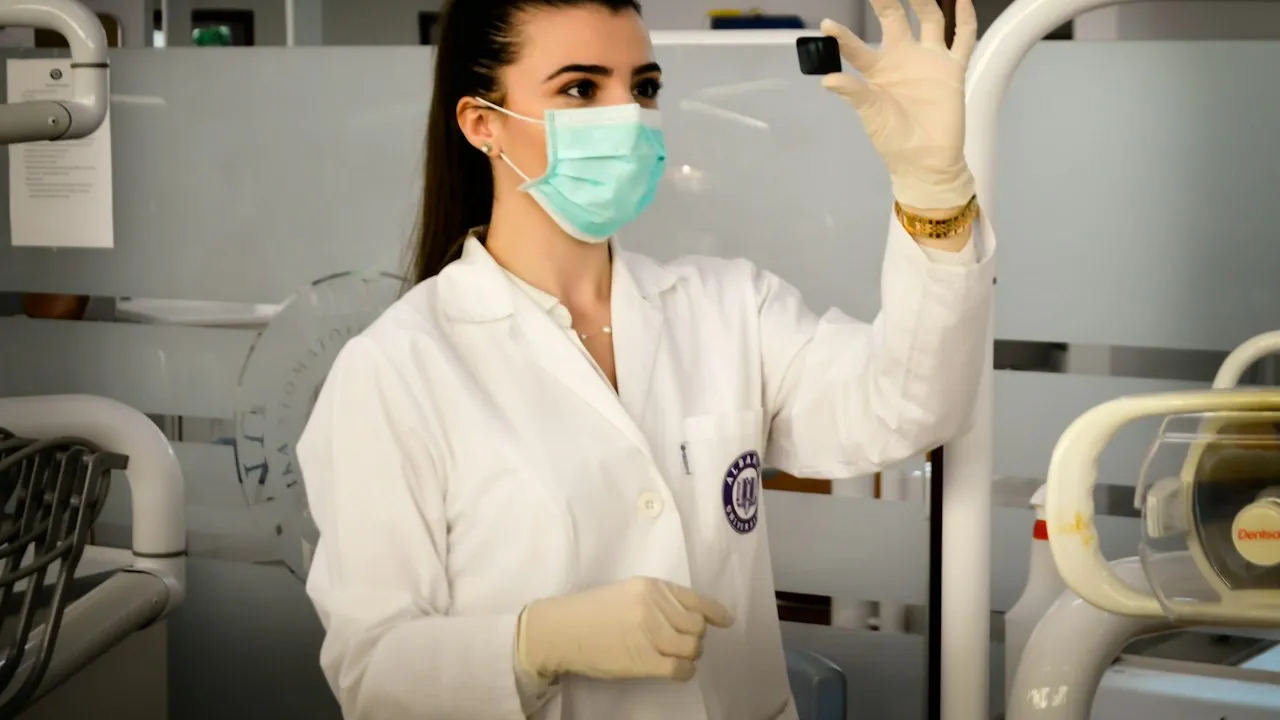
Quantum sensors are opening new possibilities for medical diagnostics by detecting biological signals that were previously too faint, too fast, or too complex for conventional instruments. Built on quantum effects such as spin, superposition, and entanglement, these devices can measure minute changes in magnetic fields, motion, temperature, and molecular structure. For patients, the potential is straightforward: earlier detection, less invasive testing, and more precise monitoring.
Quantum sensing brings greater sensitivity to clinical measurements
Many diagnostic systems work by measuring a signal produced by the body. An electrocardiogram records electrical activity in the heart, while magnetic resonance imaging detects signals from hydrogen atoms in tissue. Quantum sensors improve this model by recognising much weaker signals with exceptional precision.
A key example is the optically pumped magnetometer, a sensor that uses atoms, often rubidium, to detect magnetic fields. The brain and heart both generate extremely faint magnetic signals. Traditional systems may require bulky equipment, shielding, or cryogenic cooling to capture them accurately. Quantum magnetometers can offer highly sensitive magnetic measurements at or near room temperature.
This capability may support more practical magnetoencephalography, known as MEG, which maps brain activity. A wearable MEG cap could be more comfortable than fixed scanner-based systems and allow clinicians to observe patients while they move, speak, or perform cognitive tasks. Such flexibility could improve research and diagnosis for epilepsy, developmental conditions, stroke recovery, and neurodegenerative disease.
Brain and heart diagnostics can become more accessible
Medical imaging often depends on expensive, specialised infrastructure. Quantum sensors may reduce some of those barriers by enabling smaller and more adaptable diagnostic equipment.
Wearable brain monitoring could improve neurological care
Conventional MEG systems commonly rely on superconducting sensors that must be cooled to very low temperatures. This creates distance between the detector and the patient's scalp, which can reduce spatial accuracy. Wearable quantum sensors can be placed closer to the head, providing clearer localisation of neural activity.
For a patient with suspected epilepsy, clinicians could use these systems to identify the region where seizures begin. In time, monitoring might be performed over longer periods and in more natural settings than a traditional imaging suite permits. This could help when symptoms are intermittent or triggered by everyday activity.
The growth of connected healthcare devices also raises familiar questions about local processing, secure data transmission, and response times. How edge computing improves smart city services provides useful context on why processing data closer to its source can reduce latency and support responsive digital services.
Cardiac magnetic signals can offer another diagnostic route
The heart produces a magnetic field during each heartbeat. Magnetocardiography measures that field and may reveal abnormalities that are difficult to identify through electrical recordings alone. Quantum sensors could make magnetocardiography more portable and less dependent on dedicated facilities.
Potential applications include identifying arrhythmias, evaluating reduced blood flow to the heart muscle, and monitoring cardiac function after treatment. These tools would complement, rather than immediately replace, electrocardiograms, echocardiograms, and imaging scans. Clinical value depends on validation, workflow integration, and evidence that the new measurement changes patient outcomes.
Molecular diagnostics may detect disease at an earlier stage
Quantum sensing is not limited to magnetic imaging. Researchers are developing methods that can identify minute chemical and biological changes in blood, saliva, tissue, or breath samples.
Nitrogen-vacancy centres in diamonds are one promising platform. These atomic-scale defects can respond to magnetic fields and nearby molecules. Their sensitivity may enable the detection of biomarkers at very low concentrations, potentially before a condition produces obvious symptoms.
For oncology, this could support blood tests designed to find cancer-associated proteins, DNA fragments, or metabolic signatures earlier. For infectious disease, quantum-enabled biosensors may detect pathogens or immune responses rapidly from small samples. In metabolic medicine, they could help track glucose-related compounds, inflammatory markers, or drug levels with greater detail.
Earlier biomarker detection does not automatically mean a diagnosis is confirmed. Screening tools must be assessed for false positives, false negatives, and the risk of detecting changes that would never cause harm. Healthcare providers will still need clear clinical pathways for interpreting results and advising patients.
Reliable design will determine whether quantum devices reach clinics
A laboratory breakthrough is only the first stage of medical adoption. For quantum sensors to become routine diagnostic tools, they need to be robust, affordable, easy to calibrate, and compatible with clinical practice.
Healthcare teams require devices that produce consistent results across different locations, operators, and patient groups. Software interfaces must present complex measurements in a form that clinicians can assess quickly. Designers should also consider infection control, portability, battery life, maintenance, and accessibility for patients with mobility or sensory needs.
Data management is equally significant. Quantum sensor platforms can generate detailed streams of physiological information, particularly in wearable applications. Hospitals and technology providers must protect that data, document how algorithms process it, and ensure that clinicians can understand the basis for automated recommendations.
Data-led workflows are already changing how specialised organisations plan complex launches and measure results. How small publishers can build a data-driven book launch workflow shows how structured data practices can support decisions across a multi-stage process, a principle that also applies to diagnostic technology deployment.
Quantum sensing can support more personalised diagnostics
The strongest opportunity may lie in combining quantum measurements with established diagnostic methods. A clinician could compare a patient’s magnetic heart signal, genetic risk factors, laboratory tests, and imaging history to form a more complete view of their health.
This approach supports more personalised clinical decisions, especially when conditions present differently across individuals. It may also help track whether a treatment is working without repeated invasive procedures. For example, sensitive monitoring could detect changes in neural activity during rehabilitation or assess how a cardiac therapy affects rhythm patterns over time.
Progress will depend on collaboration between physicists, engineers, clinicians, regulators, and patient groups. Quantum sensors are sophisticated tools, but their value rests on whether they make care clearer, safer, and more useful for people.
- Quantum sensors can detect extremely weak magnetic, chemical, and physical signals from the body.
- Wearable magnetometers may expand access to brain and heart monitoring.
- Diamond-based and atomic sensors could improve biomarker testing from small samples.
- Clinical validation, data protection, and user-centred design remain central to adoption.
- Quantum diagnostics are likely to complement established tests rather than replace them outright.